

In the world of SEO, content is still the thing that’s going to get noticed because it’s what search engines like Google use to determine relevance, authority, and value. Don’t let anyone tell you otherwise. Content isn’t just some random string of words to fill up space; it’s the backbone of a site. Google? Yeah, they’re out here constantly tweaking their algorithm, and guess what? They’re paying attention to how good the content is because Google’s algorithms prioritize sites that offer valuable, relevant, and well-organized information that meets the needs of users and answers their search queries directly. It happens over and over, which gives Google exactly what it wants (quality, structure, and purpose), and boom, the rankings climb. But, like, this isn’t just some random claim. Let’s discuss some real-life examples that show just how powerful solid content can be for SEO.
The Importance of Content in SEO
SEO isn’t just about cramming in a bunch of keywords and hoping for the best. Content is the lifeblood. Too many sites throw a bunch of tech stuff at SEO and forget the heart, that’s the content. It’s what gets the search engines to care about a site. Snazzy backlinks or the fastest load time won’t help if the content isn’t up to snuff. Without strong content, a site is invisible.
Here’s why content is so important:
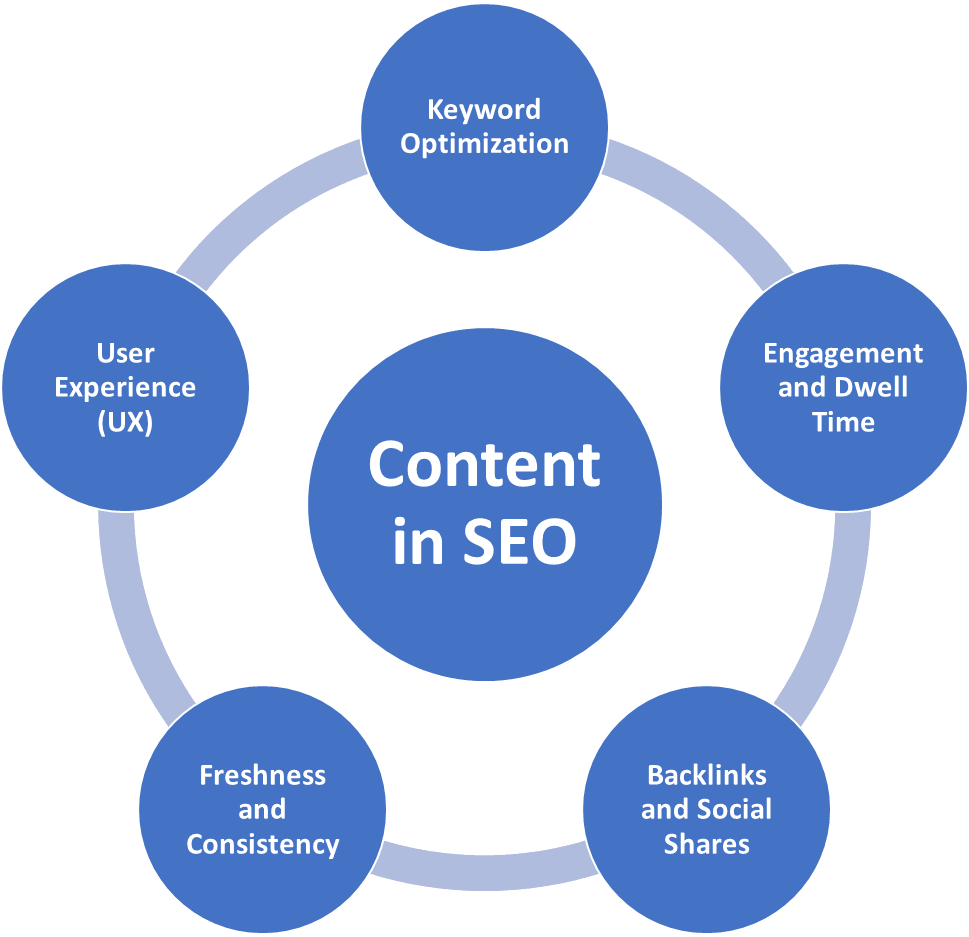
The Importance of Content in SEO
Source: Self-Made
- Keyword Optimization: It’s not rocket science. The content needs to be relevant to what people are searching for. High-quality content that answers specific questions naturally incorporates keywords without sounding like a robotic mess. When content flows, hits the target, and aligns perfectly with search intent, that’s when the magic happens. And when Google notices, things start looking good in the rankings.
- Engagement and Dwell Time: Some websites have content so good that people just won’t leave. They’re hanging out, reading, clicking around, and the next thing you know, Google takes notice. The more time people spend on a site, the more Google says, “Oh, okay, this content must be solid!” If something keeps people engaged, a site is already ahead of the game. Dwell time is like a little secret weapon, and it makes a world of difference.
- Backlinks and Social Shares: Getting those sweet backlinks is crucial. The more reputable websites link to content, the more Google likes, “Okay, they must be legit!” A few shares from major platforms, and suddenly, rankings climb. It’s like when people start talking about someone at a party, suddenly everyone wants to know what’s up. That’s what backlinks and social shares do for a site. Google pays attention to this, and so should anyone working on SEO.
- Freshness and Consistency: Google loves fresh content. Sites that update their blogs regularly show it. People keep coming back for more, and so does Google. A stagnant site is a one-way ticket to page 15. But when content is consistently updated, Google sees it as a sign that the site is alive, kicking, and ready to serve up the freshest info. Keep things moving, stay relevant, and watch SEO improve.
- User Experience (UX): If content is easy to read and looks good, people (and Google) are way more likely to stick around. It’s all about creating a vibe where people feel comfortable and engaged. Think simple, clear design, and content that doesn’t give anyone a headache. When content pops, and the layout’s smooth, the bounce rate drops, and Google notices. It’s like setting up the perfect room where people want to chill all day long. That’s good UX, and it makes a huge impact on SEO.
Real-Life Case Study
-
Flyhomes: A Surge in Organic Traffic
Industry: Real Estate
Challenge
This AI-powered home search platform was out here trying to level up its online presence in a market that’s massive and insanely competitive. Everyone is on the hunt for homes, right? The real estate space is flooded with companies trying to grab attention, so standing out isn’t exactly a walk in the park. Flyhomes? Well, they were kind of flying under the radar at first. They had all the right tools, the innovative tech, and massive potential, but when it came to visibility? Not much was happening. They needed something bold, something to get people to see them.
The real challenge here wasn’t just about having a good product, it was about cutting through the noise of a crowded industry. Real estate is a saturated field, with countless websites offering similar listings, but Flyhomes needed to make sure its content wasn’t getting lost in the mix. How could they stand out in a sea of listings, blogs, and cookie-cutter advice? They needed a strategy that would make them not only noticed but remembered. The only way to achieve that was to shake things up, create content that wasn’t just informative, but compelling and highly relevant to their audience’s real needs.
Strategy
Instead of just tossing out some generic content and crossing fingers, Flyhomes took a completely different approach. They didn’t fall into the trap of creating the usual “buy a home” kind of content that everyone else was doing. Nope, they went much deeper. Flyhomes focused on highly detailed housing-related guides, with a special emphasis on cost-of-living guides. And let’s be real: buying a house is not an impulse decision, it’s a huge commitment. People want the facts, the details, and the kind of deep dive that helps them make informed choices before parting with hundreds of thousands of dollars.
Flyhomes knew exactly what potential buyers were craving: insider knowledge, the kind of info you can’t get just anywhere. So, instead of offering shallow content, they provided well-researched, value-packed insights that people needed. These weren’t just fluffy articles that sound good but add no value. These guides were rich with useful details that answered real questions. Google loves content like this because it’s not just about keywords; it’s about relevance, authority, and true value. And that’s the magic of offering such high-quality content, Flyhomes went from being a hidden gem to a go-to resource. They didn’t just make noise; they made a statement that resonated with both users and search engines.
Results
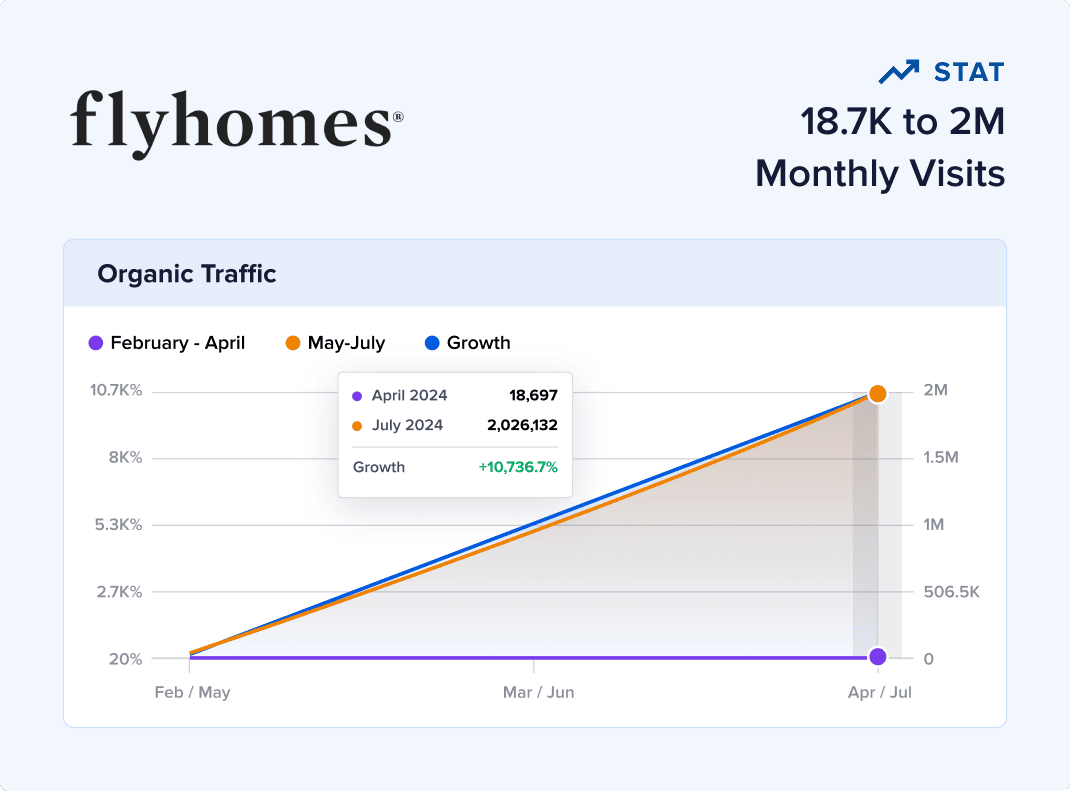
Downloaded Image: https://aioseo.com/wp-content/uploads/2024/12/flyhomes-seo-case-study.png
Now for the interesting part. In just three months, Flyhomes saw a mind-blowing 10,737% increase in traffic. This wasn’t just a little bump; it was a total surge that had the site flying high. Imagine it: a site suddenly getting hit with that much traffic. That’s the kind of thing that makes competitors sit up and take notice. And here’s the kicker: over 55.5% of all that traffic came from those cost-of-living guides.
These weren’t just a few extra visits here and there; they were the backbone, the key drivers, pulling in the right audience and making people stick around. These guides answered exactly what people were searching for, making them indispensable to anyone considering buying a home. They also gave Flyhomes a framework to measure the performance of your SEO efforts accurately, using their content as the driving force behind significant traffic growth and user engagement.
But wait, there’s more. Flyhomes wasn’t just seeing a little increase in traffic. No, they were pulling in over 1.1 million visits every single month, all because of content that was not only insanely helpful but also optimized to perfection. When you see those kinds of numbers, it’s clear: this is what happens when content hits the sweet spot. It’s not just good, it’s next-level good. That kind of result? It’s like content marketing on fire, turning heads and completely reshaping the digital landscape. That’s the true power of quality content. (https://aioseo.com/seo-case-studies/?utm_source)
-
Brainly: Leveraging User-Generated Content
Industry: Education
Challenge
So, here’s the scoop with Brainly. They were all about stepping up their game and boosting those search engine rankings, but let’s be real, standing out in the crowded world of online education isn’t exactly a walk in the park. The internet is jam-packed with hundreds of educational platforms, all competing for that sweet spot at the top of the search results. Brainly wasn’t just sitting back, hoping people would stumble upon them. Nope, they had big plans to make a splash in the sea of homework help sites. Their challenge? How to increase their search rankings and get people to not only click through but engage with their content. And trust me, that’s a lot harder than it sounds.
Everyone’s got something to offer, so what makes one platform more appealing than another? Brainly needed more than just a solid product; they needed to make sure both Google and users were really taking notice. It wasn’t enough to have good content; it needed to be visible, valuable, and engaging. So, Brainly knew it was time to take things up a notch and come up with a strategy that would get them ahead of the competition and put them on everyone’s radar.
Strategy
Instead of following the usual route of offering basic answers to common questions, Brainly took a bold step by embracing the power of peer-to-peer learning. And honestly, this shift was pure genius. By allowing users to actively participate in answering each other’s questions, Brainly didn’t just create content, it sparked an entire community-driven knowledge base.
Brainly wasn’t just tossing out a bunch of content and hoping it sticks. This approach created a giant, continuously expanding pool of content for the site. Think about it: over 2 million question landing pages. Each page was carefully crafted to match exactly what people were searching for. And the best part? Every time someone answered a question, bam, another piece of content was added. Instead of just stacking random answers, Brainly was building a searchable universe of knowledge, ready to be indexed by Google.
This approach was especially beneficial when they decided to run a complete SEO audit for better results and optimize thousands of question-based pages to align with user intent and search demand. It wasn’t about more content for the sake of it. Every page had the potential to be found by people desperately searching for answers. Brainly created a perfect place where students could get exactly what they needed, when they needed it.
Google loves this kind of content because it’s high-value, constantly updated, and perfectly optimized for search. At the same time, students were getting exactly the help they needed in real time. That’s the kind of SEO magic that happens when content aligns with what users are searching for while also making search engines fall in love with the site. It’s the best of both worlds, no question.
Results
Downloaded Image: https://aioseo.com/seo-case-studies/?utm_source
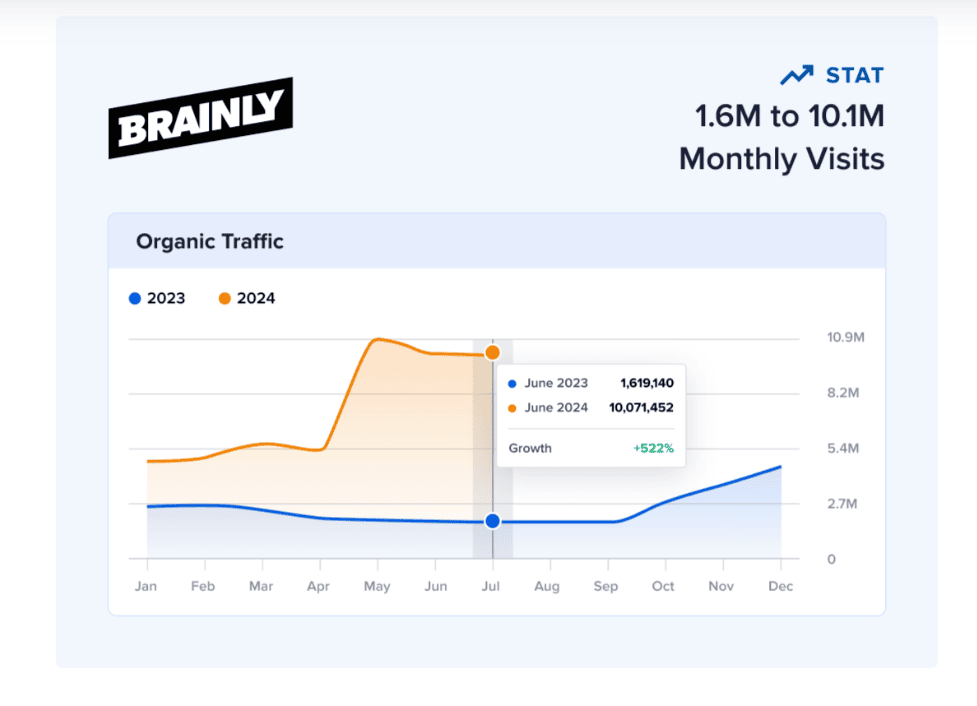
Let’s talk about the magic behind Brainly’s traffic surge using this graph. So, in June 2023, they were pulling in 1.6 million monthly visits, but by June 2024, that shot up to 10.1 million. Do the math, that’s a 522% growth! This wasn’t just a small bump; it’s a total game-changer for their visibility and reach.
This graph is a true testament to the power of a community-driven content strategy. As more and more users jumped in to answer questions, Brainly built a self-sustaining content machine. This wasn’t a quick spike or a fluke; it was a steady increase in organic traffic. Every new answer posted made the platform even more valuable, not just for students looking for help but for Google too.
Brainly didn’t just toss a bunch of SEO tricks together and hope for the best. They built a whole ecosystem that was working for them 24/7. They turned their users into content creators, and guess what? That made the platform explode. It wasn’t just about cranking out random content; it was about creating a space where everyone could chip in, and suddenly, boom, Brainly became the go-to knowledge hub.
They didn’t just exist in a crowded space, they owned it. They earned trust, built credibility, and now they’re a dominant force. It’s like when you’re at a party and suddenly everyone knows your name. That’s what happened here. Brainly wasn’t just about content; it was about engaging, empowering, and letting that organic growth work its magic. When does it all click? You have outputs that are havoc. (https://aioseo.com/seo-case-studies/?utm_source)
-
ZOE: Optimizing for Image Search
Industry: Mobile Application (Health)
Challenge
So, here’s the deal with ZOE. This digital health platform was crushing it in terms of content, think health tips, nutrition guides, wellness advice, and all that jazz. But they had one little hiccup: image search. You know when you type something into Google and the search results are all images, like when searching for “healthy smoothie recipes” and those vibrant photos pop up? Well, ZOE’s images weren’t showing up in that magic spot. They had this treasure trove of health-related images, but it was like the internet wasn’t seeing them.
It’s like having a killer playlist full of amazing tracks, but no one can find it because it’s buried under a bunch of other playlists. That’s exactly what was happening with ZOE’s images. They were missing out on all this potential traffic from people who were looking for the kind of content ZOE was offering. This wasn’t just a small issue; it was a visibility problem that was preventing them from being discovered, especially since image search results are a big deal for driving traffic, especially in a visually-driven industry like health and wellness. So, they knew they needed to fix this fast if they wanted to tap into that sweet, sweet organic traffic coming from Google’s image search. And that’s when ZOE rolled up their sleeves and got to work on turning things around.
Strategy
Here’s what ZOE did to turn things around. They didn’t just throw their images up there and hope they’d somehow magically get found. No, they got smart and optimized each image. First, they tackled alt text, that little snippet of text that describes the image for search engines. It’s like giving Google a cheat sheet of what the image is all about. Without alt text, Google has no clue what that image even represents. So, ZOE made sure every image had clear, descriptive alt text that not only helped visually impaired users but also made sure Google was in the loop.
Next, they tackled file names. It’s crucial to stop using “image001.jpg” or whatever random string of numbers. ZOE ensured their image file names were filled with relevant keywords that matched what people were searching for. This is key because Google looks at the file name to understand what the image is about. A file name like “healthy-smoothie-recipe.jpg” is way better than “image123.jpg,” right?
But hold up, ZOE didn’t stop there. They also added informative title tags for each image, providing even more context to search engines. These title tags were another opportunity to tell Google exactly what was in the image, especially when there were multiple similar images or ideas on the page. Essentially, ZOE turned each image into a well-optimized powerhouse, working overtime to get noticed on Google. They weren’t leaving any opportunities to improve visibility on the table; every little detail was covered. The result? A highly optimized image library that wasn’t just sitting there; it was actively working to attract traffic.
Results
Downloaded Image: https://aioseo.com/seo-case-studies/?utm_source
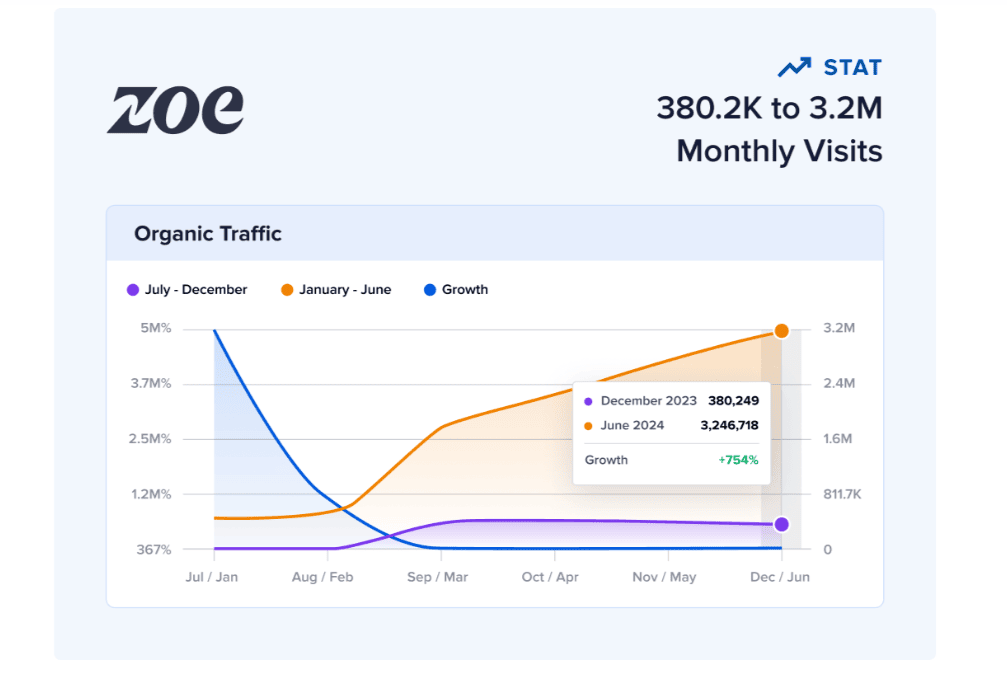
Looking at this graph, it’s clear that ZOE’s efforts to optimize their images for search results had a huge impact. Before they optimized their images, they were seeing 380,249 monthly visits in December 2023. But by June 2024? That number shot up to 3.2 million visits, a staggering 754% growth! Just let that sink in for a moment.
The timing of the growth in the chart shows exactly how ZOE’s image optimization strategy paid off. In the months following their image optimization, organic traffic just exploded. The orange line (representing January-June 2024) shows a massive upward trajectory compared to the more stable, lower traffic in the previous months (purple line). It’s like ZOE went from being virtually invisible to Google’s image search to dominating the scene. Those 72,100 image snippets? Yeah, they weren’t just a one-time fluke; they were a consistent driver of traffic, showing up across Google’s search results, and pushing ZOE’s visibility to levels they hadn’t even dreamed of.
It wasn’t just a random spike, either. The growth was steady and sustainable, meaning ZOE didn’t just get lucky; they put in the work to make sure those images kept showing up. Their visibility improved, and the traffic followed. That’s what happens when content is optimized to its fullest potential: the results aren’t just a flash in the pan, but a solid, sustained rise that keeps feeding the platform with new visitors. The graph just proves how critical image optimization can be for boosting SEO and driving organic traffic. (https://aioseo.com/seo-case-studies/?utm_source)
-
GameChampions: Content Expansion for Growth
Industry: Esports
Challenge
So here’s the deal with GameChampions, this online gaming platform that was ready to go big. They had the right vibe, the passionate players, the killer games, basically, everything needed to be successful in the gaming world. But there was one thing they were missing: visibility. The gaming world is packed. There’s competition left, right, and center with gaming platforms everywhere, fighting for eyeballs. So, being invisible in this kind of space? That’s a nightmare. GameChampions had all this potential, but they just weren’t cutting through the noise.
The website was live, the community was strong, and the content? But, it was like being the coolest person at a party and no one even noticing because they’re not standing in the right spot. The user base? Okay, but they weren’t attracting new players like they should’ve been. It was a slow burn. They weren’t showing up in search results like they should’ve been. So, what’s the next move when the right product is in place but it’s not being seen? Well, GameChampions knew they had to step up their SEO game and get their name in front of gamers who were out there searching for the best of the best in gaming content. No one wants to just exist; they want to take over. That’s when they realized they needed to get serious about getting found on Google, because let’s be real, being invisible in such a massive industry? Total buzzkill.
Strategy
GameChampions didn’t just sit around and complain, they decided to level up in the most epic way possible. Instead of waiting for traffic to magically appear, they went all-in on content. But not just any content, this was game-changing content. They weren’t just churning out random posts to fill space. No, they went deep, creating blog posts that covered every gaming topic under the sun. From reviews of the latest games to tips on leveling up, guides on strategies, and everything in between, they became the ultimate resource for gamers.
And here’s the thing, GameChampions wasn’t writing just for the sake of it. They were laser-focused on the things their audience wanted to know. They researched, analyzed, and figured out exactly what gamers were searching for. This wasn’t about posting random stuff and hoping it worked. They strategically aligned every blog post with the search intent of their target audience. When you give people exactly what they’re looking for, you don’t just get views, you get engagement, and that’s the key to ranking higher on Google.
The more relevant the content, the more people started finding the site. All of a sudden, GameChampions wasn’t just another gaming site; it was the site to turn to for expert advice and insights. The result? Traffic started flooding in. Once the content started hitting the right notes, it was like the floodgates opened. Search engines took notice, and soon, GameChampions was showing up in search results for all the top gaming queries. The game had officially changed.
Results
Downloaded Image: https://aioseo.com/seo-case-studies/?utm_source
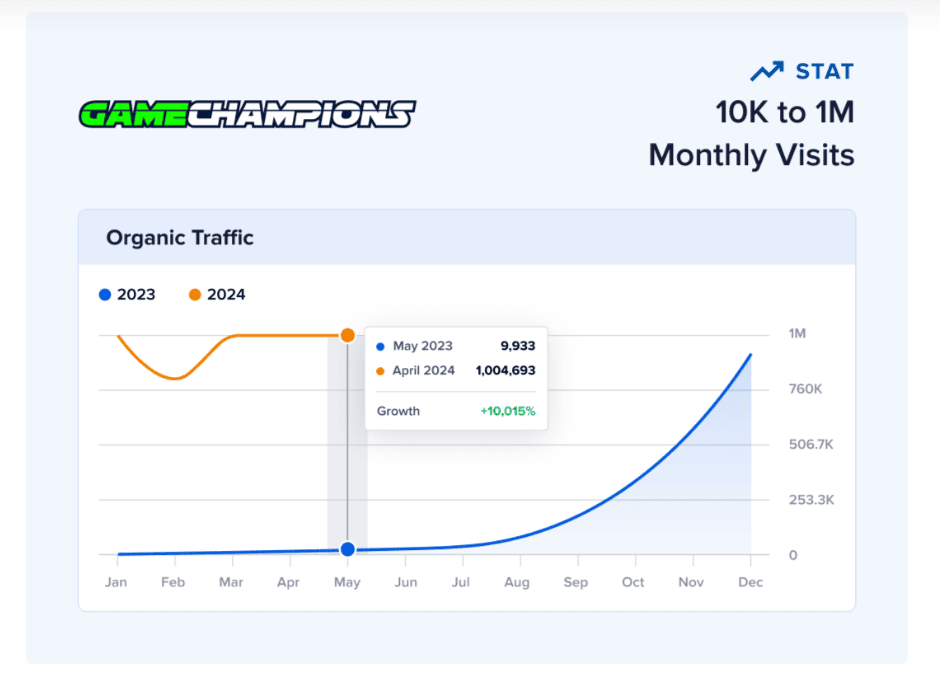
Looking at this chart, it’s crystal clear how GameChampions’ strategy paid off hugely. From a mere 9,933 monthly visits in May 2023, the platform skyrocketed to over 1 million monthly visits by April 2024. That’s a jaw-dropping 10,015% growth in traffic. Going from barely being noticed to hitting over a million visits in less than a year? It’s like going from zero to hero, and that’s exactly what happened here.
The chart shows a dramatic shift, especially after May 2023. Before that, the traffic was pretty flat, but once the content strategy started kicking in, the numbers went through the roof. The orange line (representing 2024) starts shooting upward like a rocket, leaving the previous year’s performance in the dust. That surge is directly tied to the game-changing content they were putting out, blog posts covering everything gamers wanted, which drove organic traffic like a magnet.
The result was that those blog posts ended up generating more than 55.8% of all U.S. traffic for the platform. With 133,300 keyword rankings secured, GameChampions didn’t just make noise in the gaming world, they dominated it. Search engines couldn’t ignore them anymore. The combination of consistent, high-quality content and a sharp focus on what their audience was searching for helped GameChampions climb the ranks and claim its space in Google’s search results. Looking at this chart, it’s clear: they didn’t just level up, they completely transformed their digital presence. (https://aioseo.com/seo-case-studies/?utm_source)
-
Adecco: Consolidating Content for Global Reach
Industry: Workforce Solutions
Challenge
Adecco is a huge global staffing company, was doing well, but here’s the thing: they had regional websites scattered all over the place, each one doing its own thing. It’s like trying to run a company with employees who don’t talk to each other and are all doing their own thing. No coordination, no consistency, just chaos. Each region had its website with different content, different approaches to SEO, and sometimes even completely different brand messaging. So, while they were technically visible across various countries, the whole thing felt fragmented, like pieces of a puzzle that didn’t quite fit together.
In the digital world, that’s a huge problem. You can’t show up strong globally if everything’s scattered. A unified presence is key, especially with so many brands fighting for attention. Adecco got it, chaos wasn’t cutting it. They had the platform, reach, and content, but it wasn’t synced. So, they pulled the power move: unified regional sites into one global site with one SEO strategy. That’s how you turn chaos into a powerhouse!
Strategy
So, what did Adecco do? They pulled off a total game-changer. Instead of leaving everything scattered with a bunch of country-specific domains, they made the bold move to consolidate all those regional sites into one global powerhouse. Enter adecco.com, the one-stop shop for everything. It wasn’t just about creating one website, though. Adecco went all-in, ensuring they didn’t just throw everything together and hope for the best. No, they were way more strategic than that. They implemented permanent redirects (think 301 redirects) for every regional site to make sure that all the hard-earned SEO value from the old domains didn’t just disappear. Imagine moving to a new house but making sure every single piece of furniture that’s valuable is brought along, without leaving anything behind. That’s exactly what was done with all that SEO juice.
This wasn’t just about consolidating sites for the sake of it. It was about taking everything that worked on the regional sites, from keyword rankings to valuable content, and making sure it didn’t go to waste. By redirecting traffic to the new unified site, Adecco ensured it didn’t lose its hard-won SEO rankings. It was like saying, “We’re going global, but we’re bringing all the good stuff with us.” Every little detail was accounted for, from maintaining URL structures to ensuring all historical backlinks were preserved. Smart, right? It was the perfect strategy to strengthen their global SEO presence while keeping all the valuable elements intact.
Results
Downloaded Image: https://aioseo.com/seo-case-studies/?utm_source
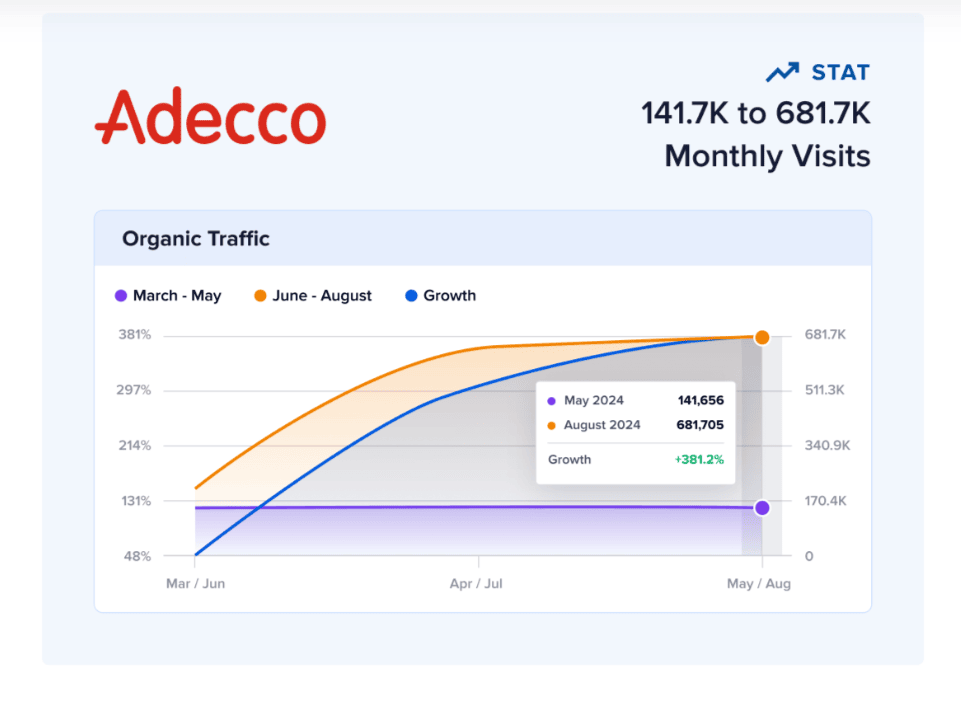
Looking at the chart, it’s clear just how much of a game-changer this was for Adecco. In just three months, they saw a 381.2% growth in organic traffic, jumping from 141,656 monthly visits in May 2024 to a staggering 681,705 visits by August 2024. That’s not just a bump in traffic, that’s an absolute surge.
The chart shows how quickly the traffic took off, particularly in the period from June to August (the orange line). The growth started to gain momentum, leaving behind the more stable traffic of earlier months. This wasn’t a slow, gradual increase; it was an explosive rise. What’s even more impressive is the steady and sustained increase throughout those months. It’s not just a random spike, it’s a clear upward trend that highlights the success of Adecco’s SEO strategy and the consolidation of all their regional content under one roof. (https://aioseo.com/seo-case-studies/?utm_source)
Final Thought
In today’s SEO game, content reigns supreme. From Flyhomes to Adecco, brands that invested in high-quality, relevant content saw massive growth in visibility, organic traffic, and engagement. Whether it’s optimizing blog posts or consolidating regional sites, the strategy is clear: when content is done right, search engines and users take notice. Quality content fuels success.—and with a content-focused SEO partner like Genzpro, brands can turn their digital efforts into measurable growth.

