

SEO is like this magical power to get people to your website, but so many people crash their progress with the most obvious mistakes. It’s easy to feel like SEO is a beast sometimes, but avoiding these basic screw-ups will keep things on track. Mistakes happen, but avoiding these five essentials is the key that will save your site from getting lost in the SEO void.
Common SEO Mistakes That Can Hurt Your Rankings
-
Invest in a Mobile-Responsive Website
Listen, if the website isn’t mobile-responsive, it’s like tossing away a huge chunk of traffic. We’re talking 60% of online searches now happen on mobile devices, and Google? Yeah, they’ve noticed. They’re boosting mobile-friendly sites in search rankings, and if your site isn’t optimised, you’re just setting yourself up for failure. People aren’t even going to stick around if they’re trying to browse on a glitchy, slow site; they will bounce faster than you can say “SEO fail.”
Your site has to be smooth on mobile. That means everything needs to load quickly, buttons need to be easy to click, and navigation should be intuitive, no weird zooming or sideways scrolling. Users should get a seamless, fast, and enjoyable experience. If it feels clunky or takes forever to load, your bounce rate’s going to skyrocket, and your rankings are going to take a nosedive.
And don’t just assume it’s good because it looks fine on your phone. Test it on every device. Seriously. Different screen sizes, operating systems, you name it. Google sees this as a massive factor in ranking, and so should you. The whole website needs to work flawlessly across mobile, tablet, and desktop. A mobile-friendly site isn’t just a nice touch anymore, it’s a must if SEO is going to work for you. So, yeah, don’t sleep on this. It’s a total game-changer.
-
Optimise Your Page Load Speed
Optimising page load speed is one of the most important things to focus on when improving your site’s SEO performance. Let’s face it, no one has the patience to wait for a page to load. In a fast-paced world, if a site takes more than a few seconds to load, users are clicking away, which is a killer for your bounce rate. And a high bounce rate? That’s bad news for SEO rankings.
Google cares a lot about page speed when ranking sites. Slow-loading pages get pushed down in search results because Google wants to provide users with the best experience. Studies show that pages on the first search results page load in around 1.65 seconds. If your site isn’t close to that, you’re missing out.
The good news is, improving speed is possible! Tools like Pingdom, Google PageSpeed Insights, and Woorank can measure your site’s load speed and break it down into actionable insights. Aim for under 2 seconds. Anything longer, and you risk losing users.
To speed things up, start with optimising images, as they’re often the main culprit behind slow loading. Compress images without sacrificing quality, leverage caching to make future visits faster, and minimise your code to remove unnecessary bloat. Regularly check your page speed and keep improving it. A faster site means better user experience and a higher chance of ranking well. Keep those load times tight and watch your rankings soar!
-
Prioritise Content Quality Over Quantity
When it comes to SEO, content isn’t just king, it’s the whole damn kingdom. But here’s the thing: quality content is the real star, not just a bunch of fluff. People aren’t here for surface-level stuff. Google loves it when users stay on your page, so the longer they stick around, the better your SEO rankings will be. To keep them hooked, your content has to be relevant, informative, and helpful.
Quality content means answering real questions, diving deep, and offering value. No one wants to click away because your article didn’t deliver. Google rewards pages where users stay longer, and that signals that your content is valuable. Relevance and depth matter big time. When users engage, your SEO gets a huge boost.
So, what’s the key? Start by creating well-researched content that answers what people are asking. Don’t just post for the sake of posting; give real value. Update older content to keep it fresh, and always make sure it’s user-focused. Keep it about their needs, not just your business. The more your content connects with your audience, the more Google will reward you for it! Quality over quantity every time.
-
Address Your Audience’s Interests and Concerns
One of the biggest mistakes businesses make is creating content that’s totally off the mark. Like, they’re so focused on what they think their audience wants, they miss the point entirely. And guess what? That’s why people bounce fast. If the content isn’t answering what the audience cares about, it’s a major miss, and the SEO is about to tank.
Here’s the thing: the focus needs to shift. Start crafting content that hits the audience where it hurts like, like getting in their heads. What are they stressing about? What questions keep them up at night? When the real stuff is answered, people stick around, and SEO looks way better. It’s that simple.
So, how do you figure out what they care about? Easy do some damn research! Hit up surveys, stalk forums, and dive into analytics. See what topics are getting the most love, and use that as the blueprint. This isn’t about guessing, it’s about knowing exactly what people need.
And here’s the kicker: make it real. Speak to the stuff they’re dealing with every day. If content can be the solution to their problems, they’ll keep coming back for more. Google notices that, and the rankings? Yeah, they’ll start climbing. So, get real, get relatable, and watch SEO thrive!
-
Keep Your Information Up-to-Date
Keeping content up-to-date is everything. Outdated content? It’s like having a crusty old sandwich sitting on your page. No one wants to deal with that, especially Google or users. If the content is stale, they’re outta there, and guess what? Google’s ranking is lower, too. Staying relevant is a big deal.
Here’s the deal: make a content plan and review posts regularly. This isn’t a “once in a while” thing. Consistency is key. When updating old posts, toss in new facts, fresh insights, or more resources. Don’t just slap a new date on it and call it a day; make sure the info is legit and up to speed with what’s trending.
And look, don’t be afraid to delete stuff if it’s straight-up useless. If it’s misleading or doesn’t add any value, just bury it. Keeping content current is like sending a “hey, I’m still here and I know what I’m talking about” message to both the audience and Google. Keep things fresh, and watch that SEO magic happen! (https://www.youtube.com/watch?v=RhpgcWltxLM)
Case Study: Organic & All-Natural Superfoods Manufacturer
Technical Issues
-
404 Error Pages: Clicking on a link and being slapped with a 404 error completely messes up the experience. Not only does it frustrate users (who are probably already a few seconds away from bouncing), but it’s also a massive hit to traffic. If people can’t find what they’re looking for, they’re outta there, and guess what? That’s a killer for SEO rankings. (https://crowdo.net/blog/case-study-seo-success)
-
Unoptimized Images: Unoptimized images can seriously slow down page load times. Pages are taking forever to load because images weren’t compressed? That’s a major problem. Not only does it annoy users, but search engines notice that slow load times, too. Slow-loading pages are ranked lower, and that’s not helping anyone. Optimising images is a game-changer.
-
Technical Pages Open for Indexing: When technical pages are left open for indexing, it’s like giving Google a bunch of duplicate content to sift through, making it harder for them to find the valuable stuff. Keep those technical pages hidden if you don’t want them messing with SEO.
-
Unoptimized Meta-Tags: Meta tags can make or break SEO. When they’re not optimised, it’s like shooting yourself in the foot. How can Google find content if it’s not labelled properly? Without clear meta tags, pages are invisible, meaning fewer clicks, less organic traffic, and a ton of wasted potential.
-
Incomplete Basic Redirects: Redirects need to be set up properly. Clicking a link and landing on a dead page or the wrong place is super frustrating. Google doesn’t like that mess either. When redirects aren’t right, it makes the site look sloppy, and search engines might abandon it. Everything needs to flow smoothly, or SEO will suffer. Fix those redirects and save the rankings!
Strategies
Link Building Strategy: It’s all about finding those authoritative, high-quality websites related to the client’s industry. That’s the magic sauce for backlinks that mean something for SEO. But it doesn’t stop there. Active efforts were made to reach out to relevant sites for collaborations. As a result, the client’s link profile started looking amazing, and their SEO authority shot through the roof!
Monitoring and Reporting: The strategy wasn’t a “set it and forget it” deal. Regular reports were sent out to track progress and measure how things were going. This wasn’t just about doing the work and hoping for the best; the client (Organic & All-Natural Superfoods Manufacturer) was kept fully informed, with feedback incorporated to make quick adjustments. It was a constant vibe check to make sure things were always improving.
Result
Organic Traffic Increase
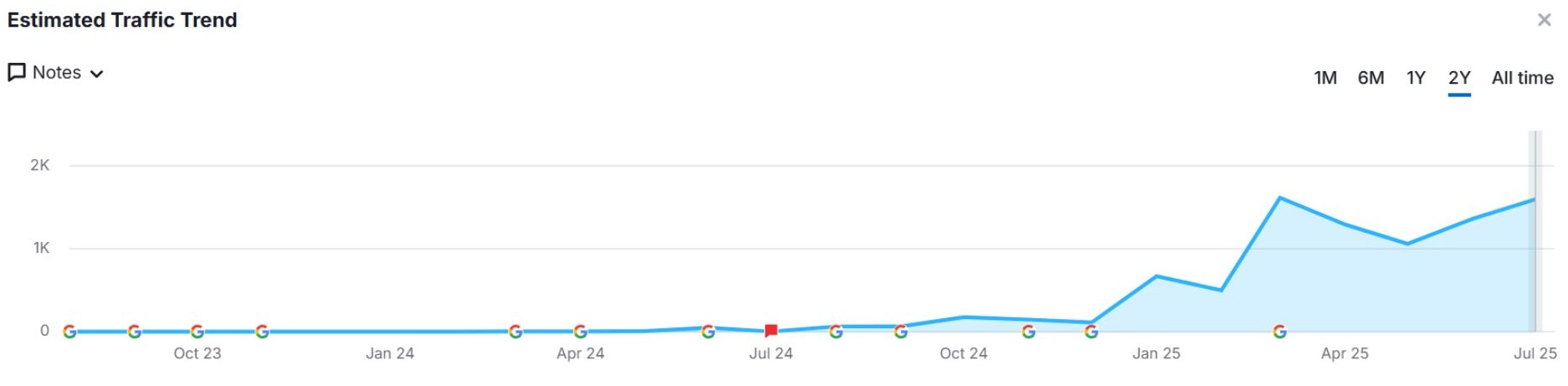
In February 2023, the site was sitting at 10,782 visitors. That was the starting point before all the magic started happening. Fast forward a few months to July, and the traffic jumped to 18,031! That’s a solid 67% growth. Who wouldn’t want that kind of success? The chart below shows a steady rise, and it’s all about those SEO efforts kicking in. Better content, stronger backlinks, and optimising everything finally paid off big time. You can seriously see how the right moves pulled in way more traffic, and that’s the real power of SEO.
Growth in Organic Keywords
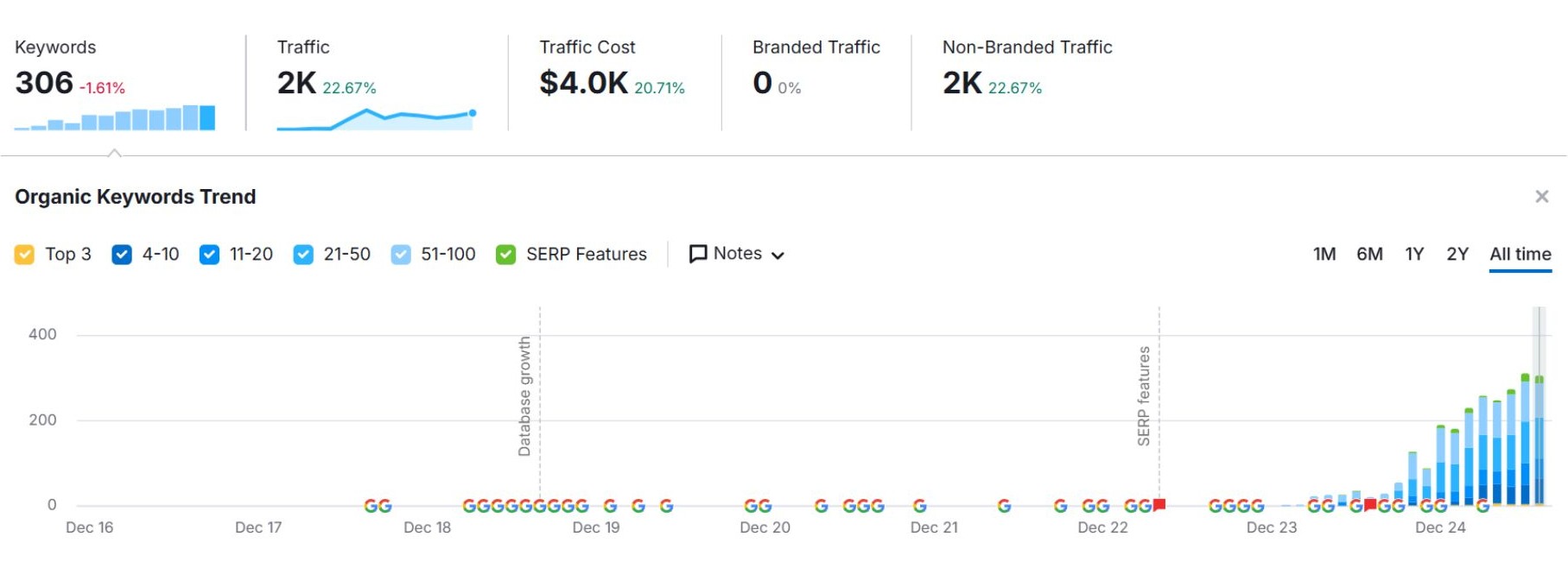
Back in July 2022, the website was ranking for 8,460 keywords, but most of those were chilling in the lower spots like 21–50 and 11–20. Fast forward to February 2023, and boom, the number jumped to 15,157, a solid 79% increase. More keywords meant the site was showing up for a ton of relevant search terms. The chart’s looking super promising big spikes in keywords in the 21–50 and 11–20 range, which means the site’s visibility and audience reach are blowing up. And yes, even keywords in positions 1–3 saw a little bump! This all shows that the SEO strategy is crushing it. More keywords = more potential customers. Those extra rankings meant more organic traffic, and it’s clear that the SEO efforts are pulling in the clicks and bringing the site more love from search engines.
Improved Website Visibility & Rankings
The website’s killing it with keyword rankings, like one keyword went from sitting at positions 7-8 straight to position 1. And don’t even get me started on the 1–3 and 4–10 positions; those are gaining some serious traction. This means the site is now popping up higher in search results for those terms. Plus, there’s been a huge boost in traffic, with some keywords seeing growth as high as 365. That’s insane! The SEO strategy is pulling in more visitors as those rankings climb. Even keywords that weren’t pulling in traffic before are starting to shine, and the more competitive keywords are also moving up. As these keyword rankings go up, visibility soars the site is reaching a whole bigger audience now. With all these rankings and traffic skyrocketing, the site’s becoming more competitive and snatching more clicks from search engines.

Downloaded Image: https://crowdo.net/blog/wp-content/uploads/2023/09/download.png
Backlinks
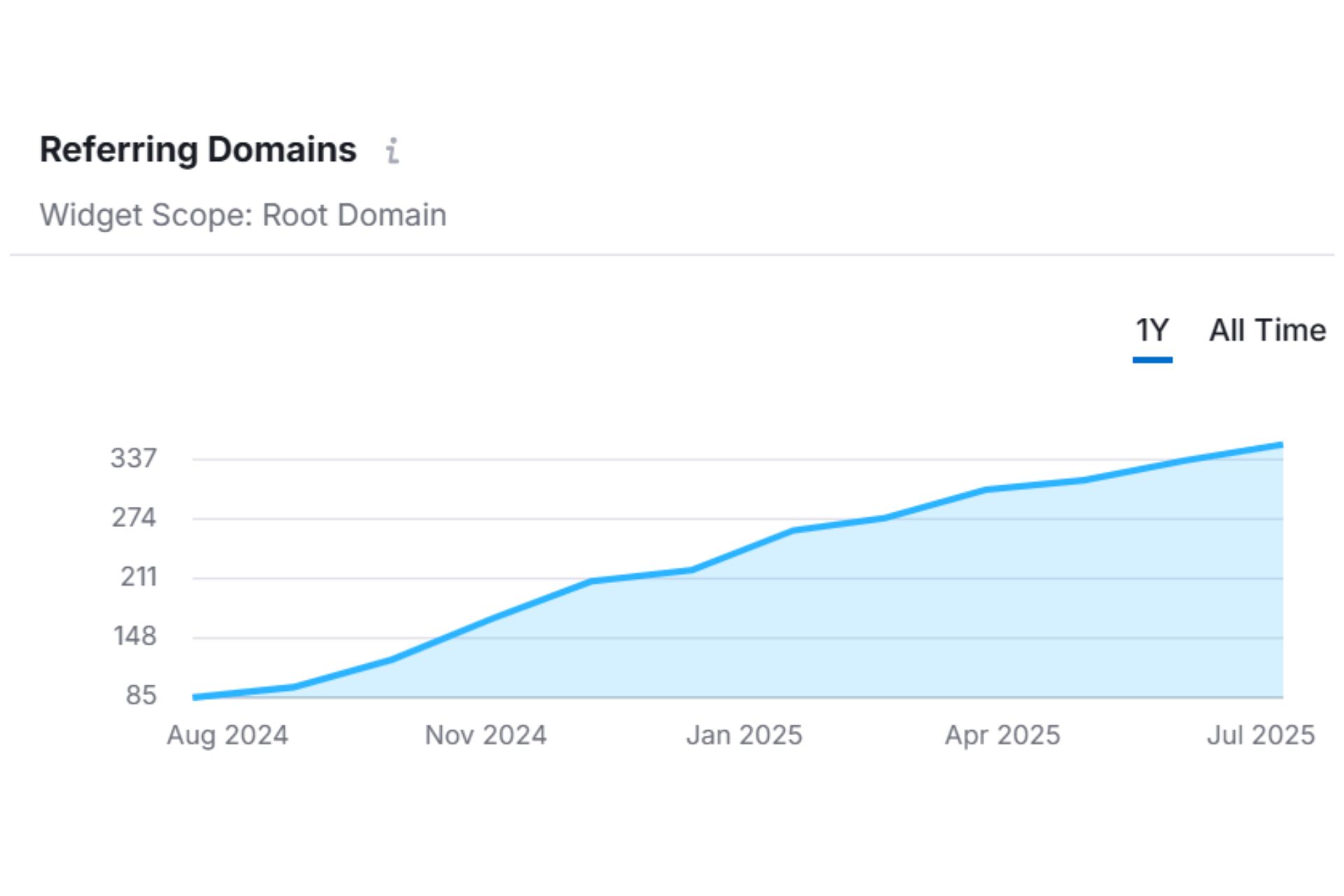
From July to October 2022, the referring domains were creeping up, but like, super slowly. It went from 300 to 500, which is good, but not exactly setting the world on fire. Then, boom, February 2023 hits, and those domains shoot up to 951. There’s some serious hustle behind that, probably tons of outreach, smart partnerships, or content that just clicked with the right people. Then, from March to July 2023, it didn’t even slow down. It just kept climbing, hitting over 1,200 referring domains by July. The backlink strategy is clearly on point, and it shows in the way the SEO’s popping. Those new backlinks are driving the site rankings up, sending in traffic, and improving the site’s online level.
Final Thought
SEO is a total game-changer, but avoiding common mistakes is essential to its success. If you’re not on top of mobile responsiveness, slow load times, and fresh content, you’re shooting yourself in the foot. Learned that the hard way! Ignoring those things didn’t help rankings. But once attention shifted to details like fixing slow pages and updating old posts, things started clicking. Google loves that! And don’t even get started on broken links and unoptimized images. Ignore that, and SEO will laugh at you. Just take care of the basics, stay consistent, and watch traffic climb like a plot twist!

