

In my decade of auditing organic growth strategies, I’ve noticed a painful pattern: business owners often wait 6 to 12 months too long to switch another SEO company. They stay because of the “sunk cost”—the fear that if they leave now, the “momentum” the current agency claims to be building will vanish.
The truth is that SEO does take time, but it should never be a mystery. SEO in 2026 is no longer about generic link building or monthly keyword reports. With search engines evolving through AI-driven algorithms, predictive search intent, and stricter spam detection, understanding how Google Search works is essential for evaluating whether your SEO strategy is aligned with modern search standards.
A competent SEO expert or SEO consultant can steadily improve visibility, authority, and qualified traffic. The wrong one can quietly stall your growth for months without you realising it.
This is why knowing when to switch to other SEO company is critical for any business relying on organic search. In this guide, we’ll break down the clear warning signs, practical evaluation steps, and a proven decision framework used by experienced SEO consultants to determine whether it’s time to stay, fix the relationship, or move to a more capable SEO partner.
1. The Hidden Cost of Staying Too Long With the Wrong
In my experience auditing mid-market accounts, the most expensive invoice a business pays isn’t the one from their SEO firm-it’s the opportunity cost of staying with the wrong one. I’ve stepped into accounts where a brand spent $5,000 a month for 18 months ($90,000 total) only to realize their “growth” was just brand-name traffic they would have captured anyway.
Why Businesses Wait Too Long to Switch
The hesitation usually stems from a lack of technical confidence. Business owners often feel like they are “too far in” to turn back.
- The Communication Buffer: Agencies often use jargon to mask a lack of activity. When a client asks for results, they’re met with talk of “algorithm fluctuations” or “indexing delays,” which buys the agency another 90 days of retainer.
- Fear of De-indexing: There is a common (and usually unfounded) fear that if you fire an agency, they will “turn off” your SEO or your rankings will plummet instantly.
- The Relationship Trap: Often, the account manager is likable. It’s hard to fire someone you like, even if the data shows they are underperforming.
The “SEO Momentum” Myth
One of the most effective psychological tactics agencies use to retain unhappy clients is the “Momentum Myth.” It sounds like this:
“We’ve spent the last six months laying the foundation. We are right on the cusp of a breakthrough. If you switch to another SEO company now, all that momentum will be lost and you’ll have to start from zero.”
The Reality Check: SEO is cumulative, but it isn’t fragile. If an agency has done high-quality work (clean code, great content, ethical backlinks), that value lives on your domain, not in their office. If they tell you the progress is “tied” to their continued service, they are likely using proprietary “rental” links or PBNs (Private Blog Networks), which is a massive red flag.
The Real Cost: More Than Just a Retainer
When you fail to switch to another SEO company when the signs are clear, you aren’t just losing your monthly fee. You are suffering from:
- Market Share Erosion: While you sit at a standstill, your competitors are capturing the “Digital Real Estate” (Page 1 rankings) that becomes harder and more expensive to reclaim every month.
- Compounding Lead Loss: If your average lead is worth $500 and your agency’s stagnation is costing you 20 leads a month, a 12-month delay isn’t just a $60k retainer loss—it’s a $120,000 revenue hit.
Expert Insight: I recently consulted for a B2B SaaS firm that stayed with a “budget” agency for 15 months. They saw 0% growth in non-branded organic trials. After switching, we discovered the previous agency had blocked their most important product pages via robots.txt by mistake. They didn’t just lose their retainer; they lost an entire fiscal year of growth because no one was actually looking at the engine.
2. SEO Takes Time – But It Should Never Be a Black Box
In 2026, the “trust gap” in SEO is wider than ever. Because the landscape has shifted from simple blue links to Generative Engine Optimization (GEO) and AI-driven snapshots, many agencies use the complexity of these new systems as a shield. They treat SEO like a “black box”—you put money in, and you’re told to wait for magic to happen inside.
As a strategist, I can tell you: if your agency cannot explain their work in plain English, they likely don’t have a plan.
What Transparent SEO Looks Like in 2026
Transparency isn’t just about being “honest”; it’s about data accessibility. A transparent SEO services provider ensures you own your data and understand the why behind every move.
- Entity-Based Strategy: They don’t just target “keywords”; they explain how they are building your brand’s “Entity” so AI models (like Gemini or SearchGPT) recognize you as an authority.
- Search Everywhere Optimization: They show you how your brand is performing not just on Google, but in AI overviews, TikTok search, and even voice-activated assistants.
- Live Work Logs: You should have access to a project management tool (like Asana, ClickUp, or a shared sheet) that shows exactly which articles were published, which technical bugs were fixed, and which backlinks were earned this week.
What Real SEO Reporting Includes (The Proof)
Stop settling for a PDF that only shows “Rankings went up.” A 2026-standard report must connect SEO to your bottom line:
- Citations in AI Overviews: How many times was your site used as a “source” in generative search results?
- Conversion Attribution: Which organic pages specifically led to a form fill or a sale? (Mapped via your CRM).
- Technical Vitality: Beyond just “speed,” reporting on INP (Interaction to Next Paint) to show how responsive your site feels to real humans.
What Agencies Hide Behind “Technical Jargon”
Don’t let these common “smoke and mirror” phrases stop you from asking for results:
- “We’re optimizing your Schema Markup.” * Translation: “We’re adding some code.” This takes hours, not months. If this is their only update for 90 days, they are coasting.
- “The algorithm update caused a temporary volatility.” * Translation: “We don’t know why traffic dropped.” A pro-active agency should show you exactly which pages were hit and a 30-day plan to pivot.
- “We are building topical authority.” * Translation: “We are writing blog posts.” Ask to see the Content Map—if they can’t show you how these posts link together to solve a user’s problem, they are just “word-stuffing.”
Executable Solution: The 3-Point Transparency Checklist
Send these three questions to your agency today. Their answers (or lack thereof) will tell you if it’s time to switch to another SEO company.
- “Can I see our ‘Entity Map’ or topical cluster strategy for the next 90 days?”
- What you want: A visual or list showing how content connects to prove they aren’t just writing random blogs.
- “Which specific links did we earn last month, and can I see the ‘Outreach Trail’ for them?”
- What you want: Proof of real, earned links from reputable sites, not “link farm” placements.
- “How are we tracking our visibility in AI-generated answers (GEO) compared to our competitors?”
- What you want:A tool or manual report showing your brand being cited in AI snapshots.
3. Warning Signs that It’s Time to Switch to Other SEO Company
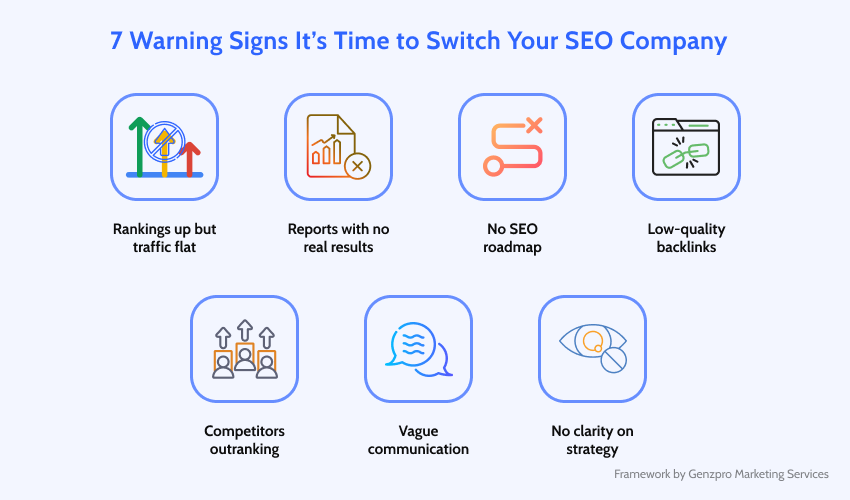
Identifying the moment to switch to another SEO company isn’t always triggered by a sudden traffic drop. In most cases, the problem appears gradually: reports look busy, but real growth never arrives.
Over the years of auditing organic strategies, I’ve noticed that businesses usually miss the early warning signals and continue paying retainers long after performance has stalled.
Here are some of the most common indicators that your current SEO partner may have hit a ceiling:
- Rankings improve but organic traffic remains flat
- Monthly reports show activity but no business results
- There is no clear SEO strategy or roadmap
- Backlink building focuses on quantity instead of authority
- Competitors consistently outrank you for important terms
- Communication becomes vague or overly technical
- You cannot clearly explain what your agency is actually doing
Each of these signs often points to deeper issues in strategy, execution, or transparency.
If you want a deeper breakdown, read our full guide on 7 warning signs it’s time to switch to another SEO company.
4. The 30-Minute SEO Audit That Reveals the Truth
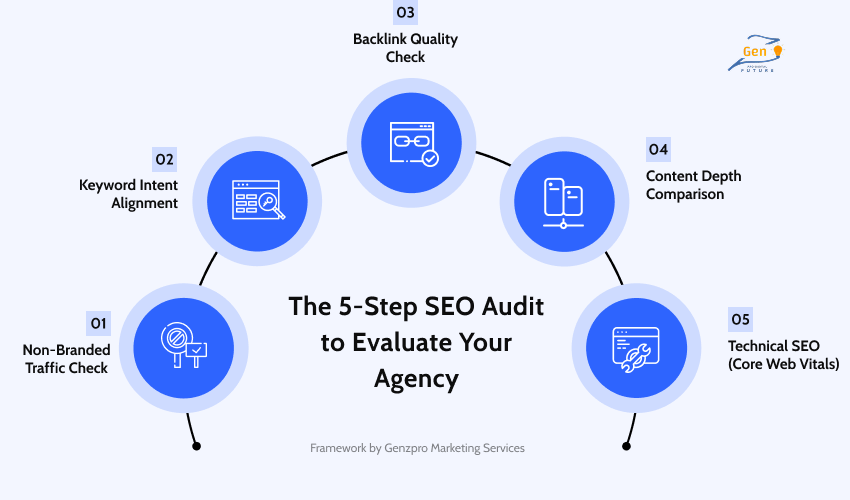
Before you decide to switch to another SEO company, you need data-backed certainty. Most agencies count on the fact that business owners won’t look “under the hood.”
Use this 5-step diagnostic framework to audit your current SEO agency’s performance in real-time. If they fail more than two of these steps, you aren’t just stagnant—you’re falling behind.
Step 1: The “Non-Branded” Pulse Check
Open your Google Search Console (GSC), go to Search Results, and set the date range to “Last 12 Months.” Now, add a query filter: Queries not containing [Your Brand Name].
- The Goal: A steady “staircase” upward trend in impressions and clicks.
- The Red Flag: A flatline or a “heartbeat” (spikes followed by immediate crashes).
- The Truth: If your only growth is coming from people searching for your specific company name, your agency isn’t doing SEO—your brand reputation is doing all the heavy lifting.
Step 2: Keyword Intent Alignment (The “Revenue” Test)
Look at the top 10 keywords currently driving traffic to your site in GSC or Semrush.
- The Goal: At least 4 out of 10 should have Commercial or Transactional intent (e.g., “buy [product]” or “[service] company in Dubai”).
- The Red Flag: Your top keywords are all “Informational” fluff that doesn’t lead to sales (e.g., “what is the history of [industry]”).
- The Truth: Agencies often target “easy” informational keywords to inflate traffic numbers and make their reports look successful, even if that traffic never converts into a lead.
Step 3: The “Backlink Smell Test”
Request a list of the last 10 backlinks your agency built. Pick three at random and visit the sites.
- The Goal: The site looks like a professional publication with real authors, recent comments, and a specific niche.
- The Red Flag: The site looks like a “link farm”-a generic blog covering everything from “Weight Loss” to “Crypto” to “Kitchen Tiles” on the same homepage.
- The Truth: Low-quality backlinks can violate Google spam policies, which means those links may be ignored-or worse, trigger ranking penalties, and when you switch to another SEO company, the new team will have to spend months cleaning up the mess.
Step 4: Content Depth vs. The “Top 3”
Take your most important service page and compare it to the top 3 competitors ranking above you.
- The Goal: Your page should have more original data, better visuals (charts/videos), and clearer answers to “People Also Ask” questions.
- The Red Flag: Your page is a “thin” 500-word block of generic text that looks like it was generated by a 2023 version of ChatGPT without human editing.
- The Truth: In the era of Generative Engine Optimization (GEO), “good enough” content is invisible. If your agency isn’t building “Topical Authority,” they aren’t building a future for your site.
Step 5: The “Technical Foundation” Audit
Run your homepage through Google PageSpeed Insights.
- The Goal: “Green” scores (90+) for Core Web Vitals, specifically LCP (Load speed) and INP (Responsiveness).
- The Red Flag: Constant “Red” scores while your agency claims “everything is optimized on the backend.”
- The Truth: You can have the best content in the world, but if your site is slow or frustrating to use, Google will prioritize a competitor who offers a better user experience.
Audit Results: Should You Stay or Go?
- Passed 4-5 Steps: Your agency is likely doing a solid job. SEO is a slow burn; give them another quarter.
- Passed 2-3 Steps: Your agency is “coasting.” They are doing the bare minimum to keep the retainer.
- Passed 0-1 Steps: This is a terminal situation. You need to switch to another SEO company immediately before your domain authority is permanently damaged.
5. When You Should NOT Switch Your SEO Company Yet
To be a truly effective partner, an SEO writer must tell you when not to pull the trigger. Switching too early can be just as damaging as staying too long. SEO is a compounding interest game; if you restart the clock every four months, you will never see the “hockey stick” growth curve.
Before you switch to another SEO company, ensure you aren’t walking away right before the breakthrough.
1. The Strategy is Sound, but the Timeline is Realistic
If your agency has provided a 6-month roadmap and you are only in Month 3, performance might look “flat” because they are still in the Technical Debt & Content Foundation phase.
- The Logic: You cannot build a skyscraper on a swamp. If they spent the first 60 days fixing 404 errors, optimizing Core Web Vitals, and cleaning up your site architecture, they haven’t even started the “ranking” phase yet.
- The Proof: Look at your Crawl Stats in Google Search Console. If Google is visiting your site more frequently, the foundation is being laid.
2. A Core Google Update Just Landed
Google releases “Core Updates” several times a year. These often cause temporary “volatility”—your rankings might bounce between Page 1 and Page 3 for 14–21 days while the dust settles.
- The Logic: Firing an agency during a “volatility window” is like firing a pilot while the plane is experiencing mid-air turbulence.
- The Expert Move: Wait 30 days post-update. A high-quality agency will use this time to analyze the “winners and losers” of the update and pivot your strategy accordingly. If they have a recovery plan, stay the course.
3. You Haven’t Implemented Their Recommendations
This is a hard truth for many business owners: SEO is a two-way street. If your agency has sent you 10 technical tickets or 5 content pieces for approval and they’ve been sitting in your inbox for a month, the lack of results is a bottleneck issue, not an agency issue.
- The Logic: An SEO company can only optimize what you allow them to touch. If your dev team is blocking their technical fixes, no agency in the world can rank you.
4. You Are Testing a New “Entity” or Product Line
When you launch a new category, you are essentially starting from zero “Topical Authority.”
- The Logic: Even if your main site is strong, Google needs time to associate your brand with a new niche. If your agency is successfully getting your new pages indexed and crawled, they are doing their job. Authority takes 3–6 months to “leak” from your old pages to your new ones.
The “Stay or Go” Decision Matrix
| Situation | Action |
| Rankings dropped 10% after a Core Update | Wait 30 Days. See if the agency has a diagnostic plan. |
| Agency hasn’t sent a report in 2 months | Switch. Communication is the bare minimum of service. |
| Traffic is flat, but “Leads” are up 20% | Stay. They are attracting higher-quality, bottom-funnel users. |
| They are building “Directory Links” in 2026 | Switch. This is an outdated, high-risk tactic. |
6. How to Exit an SEO Agency Without Losing Your Rankings
One of the biggest fears businesses have before they switch to another SEO company is the possibility of losing their rankings during the transition. In reality, a properly managed exit rarely causes major ranking drops because most SEO value-content, backlinks, and technical improvements-lives on your domain.
The key is ensuring that you retain ownership of your digital assets before ending the contract. This includes access to platforms like Google Search Console, analytics accounts, and your website’s content management system.
Many ranking issues during agency transitions happen because businesses lose access to important data or technical configurations.
If you want a detailed step-by-step process, read our complete guide on how to exit an SEO agency without losing your rankings. This guide explains exactly how to secure your SEO assets, maintain backlink value, and transition smoothly to a new SEO partner.
7. How to Choose the Right SEO Company
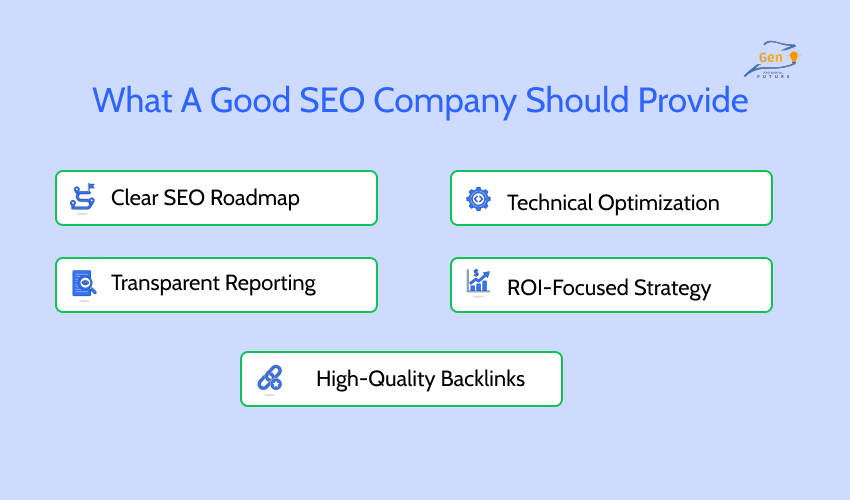
Once you decide to switch to another SEO company, the next step is making sure you don’t repeat the same mistake. Many businesses get stuck in a cycle of changing agencies every year because they evaluate SEO partners based on promises instead of strategy.
A reliable SEO services provider should provide a clear roadmap, transparent reporting, and measurable business outcomes-not just activity reports filled with keywords and backlinks.
Choosing to switch to another SEO company is a strategic pivot, not a sign of failure. By auditing your current SEO partner, securing your assets, and vetting the next agency with the rigours of a consultant, you turn your SEO from a mystery expense into a predictable revenue driver.
Before you switch, make sure to read our complete guide on how to choose the right SEO agency.
In that guide, we break down the exact criteria experienced SEO consultants use to evaluate agencies, including strategy validation, technical expertise, and real performance indicators.
8. The Simple Decision Framework: Stay, Fix, or Switch
To make the final call on whether to switch to another SEO company, you must separate your personal rapport with the account manager from the cold, hard data on your dashboard. Use this “Triage” model to determine if your partnership needs a minor adjustment or a total replacement.
| Situation | What It Usually Means | Recommended Action |
| A clear SEO strategy exists but execution is slow | The agency understands the direction but may lack resources or prioritisation | Fix the relationship first. Set clear milestones and timelines before deciding to switch to other SEO company |
| Reports show activity (links, blogs, audits) but no strategic roadmap | The agency is focusing on tasks instead of outcomes. | Consider switching SEO company if they cannot explain the long-term strategy |
| Rankings fluctuate but organic traffic is steadily growing | SEO momentum is building and the strategy is likely to work | Stay and monitor progress |
| Rankings improve but traffic and leads do not | Keywords being targeted may not match search intent | Request a strategy correction before switching |
| Organic traffic declining for 6+ months without explanation | Possible algorithm impact, poor strategy, or lack of adaptation | Conduct an independent SEO audit and prepare to switch |
| Competitors consistently outrank you despite similar authority | Your SEO strategy is outdated or incomplete. | Evaluate switching to a more experienced SEO company |
| The agency cannot clearly explain what they are doing or why | Lack of transparency or expertise | Strong signal to switch to other SEO company |
Final Conclusion
SEO in 2026 is an arms race of data, entity building, and authority. Every month you spend with the wrong partner is a month your competitors move the goalposts further away. Use this framework to act decisively—your domain’s future depends on it.
If you’re unsure whether your current SEO strategy follows Google’s SEO best practices, reviewing the official SEO Starter Guide can help you understand what sustainable search optimization should actually look like.
9. Before You Switch to Other SEO Company, Ask These 9 Questions
Before you finalize the decision to switch to another SEO company, you owe it to your business to have one “Final Accountability” meeting. These nine questions are designed to cut through the jargon and force your current SEO agency to prove their value.
If the answers are vague, defensive, or unprepared, you have all the evidence you need to move on.
The Final Accountability Questionnaire
- What is our core ranking strategy for the next 6 months?
- What to look for: A specific focus on topical clusters or “Entity” building.
- Red Flag: “We’re going to keep building links and writing blogs.”
- Which specific pages are currently driving our revenue growth?
- What to look for: A direct connection between organic landing pages and your CRM/Sales data.
- Red Flag: They only talk about “Total Impressions” or “Traffic Volume.”
- What specific “Authority Signals” are we building this month?
- What to look for: Mention of high-quality backlinks, expert interviews, or Schema markup (JSON-LD) that clarifies your brand’s expertise.
- Red Flag: “We’re doing directory submissions and social sharing.”
- How are we technically competing against the top-ranking domains in our niche?
- What to look for: A gap analysis of Core Web Vitals (INP/LCP) or content depth compared to your #1 competitor.
- Red Flag: “Our site is already fast enough; we don’t need to worry about that.”
- What is our plan for visibility in AI-generated snapshots (GEO)?
- What to look for: Strategies to get your brand cited as a source in AI Overviews and search-based LLMs.
- Red Flag: “AI doesn’t matter for SEO right now.”
- Can you show me the “Outreach Trail” for our last 5 backlinks?
- What to look for: Proof of real communication with real editors on relevant websites.
- Red Flag: They claim the process is “proprietary” or can’t show the source.
- Why did our traffic [Increase/Decrease] during the last Google Core Update?
- What to look for: A data-backed explanation (e.g., “Our ‘Helpful Content’ score improved” or “Competitors added more video media”).
- Red Flag: “Google is just being volatile; it will bounce back.”
- If we doubled our budget tomorrow, where exactly would the money go?
- What to look for: A scalable plan for aggressive content expansion or high-tier PR.
- Red Flag: “We’d just do more of the same.”
- How much of our organic traffic is coming from “Non-Branded” searches?
- What to look for: Proof that they are reaching new customers who didn’t already know your company name.
- Red Flag: A high percentage of traffic coming from searches for your own business name.
Executable Solution: The “Email Audit”
Copy these 9 questions and send them to your account manager today. Give them 48 hours to respond in writing. If the response is a request for a “verbal chat” instead of a data-backed email, it usually means they are trying to “talk” their way out of a lack of results.
10. Conclusion: The Right SEO Partner Should Accelerate Growth, Not Delay It
The most persistent myth in digital marketing is that SEO is a “black box” where results are invisible for years. While it is true that SEO takes time—often six months to a year to see a compounding return—that time should be filled with clarity, aggressive strategy, and measurable incremental progress.
Waiting for a breakthrough that never comes is not “being patient”; it is losing market share to competitors who have already embraced the search standards of 2026. If your current SEO agency cannot provide a roadmap, refuses to show you their link-building trail, or hides behind technical jargon, they are not a partner—they are a bottleneck.
The decision to switch to another SEO company is often the exact catalyst a stagnant domain needs to finally break through to Page 1. You deserve a team that views your organic growth as a revenue driver, not just a monthly retainer to be managed.
Stop Settling for “Invisible” SEO
If your current reporting feels like a mystery and your growth has hit a ceiling, it’s time for a strategy built on transparency and technical precision. At Genzpro Tech, we strip away the jargon and focus on what actually moves the needle: topical authority, entity-based optimization, and measurable ROI.
Still wondering if you should switch to other SEO company? Let Genzpro Tech perform a strategic SEO audit and show you exactly what’s working, what’s not, and what to fix next.

